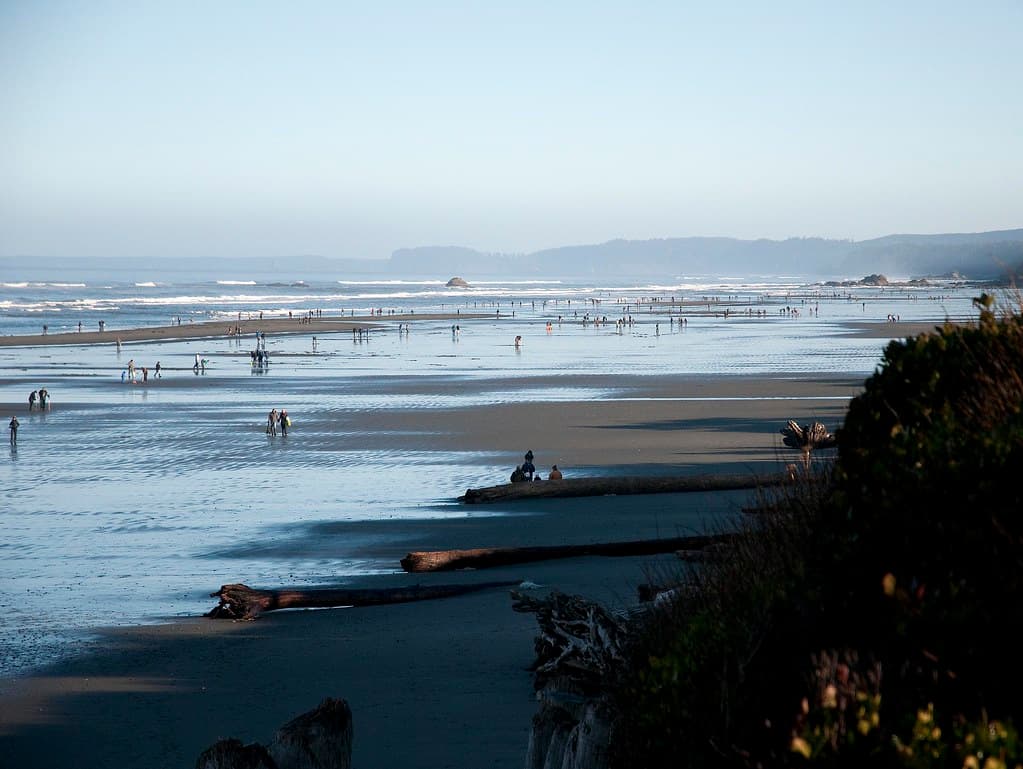
The beaches along Washington's Pacific coast are among the best razor clamming destinations in North America. Seabrook sits at the center of this coastal stretch, giving guests direct access to productive clamming beaches without a long drive. Here is what you need to know before you go.
What Are Razor Clams?
Pacific razor clams (Siliqua patula) are a species of large, elongated saltwater clam found along the Pacific coast from Alaska to California. Washington's coast hosts some of the densest razor clam populations in the world, particularly along the Gray's Harbor shoreline near Seabrook.
Adults typically grow to 3–6 inches in length and live just below the sand's surface, where they filter-feed on phytoplankton. A single clam can dig downward at a rate of roughly one inch per second—fast enough to require quick technique from clammers above. Washington's Department of Fish and Wildlife (WDFW) manages the harvest carefully, setting seasons and limits based on annual population surveys.
When Is Razor Clamming Season at Seabrook?
Washington razor clamming seasons are not fixed calendar dates—they are set by the WDFW based on population assessments and marine biotoxin testing. In practice, the season typically runs from mid-October through late April, with individual openings announced a few days in advance.
Each approved dig is tied to low-tide events, which occur in predictable cycles. The WDFW's razor clam hotline (1-866-880-5431) is updated before each dig and lists open beaches, dates, and any special conditions. The Washington coast near Seabrook (Twin Harbors and Copalis Beach) is among the most consistently open stretches of coast in the state.
- Season generally runs October through April, subject to WDFW approval
- Individual digs are announced 48–72 hours in advance
- Check the WDFW hotline (1-866-880-5431) or wdfw.wa.gov before visiting
- Digs occur during daylight and evening low-tide windows
- Marine biotoxin (domoic acid) levels can close beaches without notice—always verify
💡 Tip
Evening low tides often produce better conditions than morning tides. Headlamps are required for night digs—bring a good one.
Licenses and Limits
Every clammer age 15 and older needs a valid Washington State fishing license with a razor clam endorsement. Licenses are available online at fishhunt.dfw.wa.gov, at local sporting goods stores, and at Fresh Foods Market in Seabrook's town center.
The daily limit is 15 razor clams per person, and all 15 must be retained whether they are kept whole or broken during harvest—this prevents waste and ensures clammers dig carefully. There is no size limit on razor clams. Clams must remain in their shells and in identifiable form until they reach your place of abode or a licensed food facility.
- License required for all clammers age 15+
- Purchase at fishhunt.dfw.wa.gov or Fresh Foods Market in Seabrook
- Daily bag limit: 15 razor clams per person
- All 15 must be retained once your limit is reached
- Clams must stay in shells until you reach your accommodation
Gear You Need
Razor clamming requires minimal gear, but the right equipment makes the process significantly easier. The two primary digging methods are the clam gun (a tube-style suction pump) and a razor clam shovel (a long-handled, narrow blade). Both are effective; the gun method tends to produce more intact clams while the shovel method allows faster digging in experienced hands.
- Clam gun or razor clam shovel (rent locally or bring your own)
- Mesh bag or bucket for your catch
- Rubber gloves—clam shells are sharp
- Waterproof boots or waders—the sand is wet and the clams are in the swash zone
- Headlamp for evening digs
- Washington fishing license with razor clam endorsement
💡 Tip
Razor clam shovels and guns can often be rented or borrowed through local gear shops near the beach. Check with your rental host or Fresh Foods Market for current availability.
How to Find and Dig Razor Clams
Razor clams reveal themselves through a small depression or 'show' in the wet sand—typically a keyhole-shaped dimple about the diameter of a dime or nickel. Stamping your foot near the swash zone or waiting for a wave to wash back can trigger shows from clams just below the surface.
Once you spot a show, move quickly. Place your clam gun directly over the show and pump down to create suction, then pull up—the clam and surrounding sand will rise into the tube. With a shovel, push the blade straight down on the ocean side of the show, then lever toward yourself and reach in with your gloved hand to retrieve the clam. Work fast—a razor clam can escape in seconds.
- Look for keyhole-shaped dimples (shows) in wet sand near the swash zone
- Stamp your foot to trigger shows when the sand looks likely but quiet
- Dig immediately—razor clams are fast and will escape
- Always dig on the ocean side of the show, not directly on top
- Rinse clams in seawater before bagging
Cooking Your Catch at Seabrook
Razor clams are best eaten fresh, and Seabrook vacation rentals are typically well-equipped for cooking. After digging, clean the clams by rinsing in fresh water, then make a shallow cut along the edge to open and butterfly the meat.
The classic preparation on the Washington coast is panfried razor clams—dredged in seasoned flour, egg-washed, and fried in butter until golden. The entire process takes about 20 minutes. Clams can also be fried in light batter, added to chowder, or grilled in the shell if you dig large ones. Cleaned clam meat keeps refrigerated for up to two days.
💡 Tip
Fresh Foods Market in Seabrook's town center stocks everything you need for panfried razor clams: butter, flour, eggs, and seasoning. They're also a good source of local knowledge on current beach conditions.
Frequently Asked Questions
Can you razor clam at Seabrook WA?
Yes. The beaches near Seabrook—including Twin Harbors and Copalis Beach—are among Washington's most productive razor clamming beaches. The season typically runs October through April, with specific dig dates set by the Washington Department of Fish and Wildlife (WDFW). Always verify open dates on the WDFW hotline (1-866-880-5431) before heading out.
What license do I need for razor clamming in Washington State?
You need a Washington State fishing license with a razor clam endorsement. Clammers under 15 do not need a license. Licenses are available online at fishhunt.dfw.wa.gov, at Fresh Foods Market in Seabrook, and at sporting goods stores in nearby Aberdeen and Ocean Shores.
What is the razor clam limit in Washington?
The daily bag limit is 15 razor clams per licensed clammer. All 15 must be retained once your limit is reached, even if clams are broken or damaged during harvest. There is no minimum size requirement.
What time is best for razor clamming?
Razor clamming is done during low-tide windows, which WDFW designates for each approved dig. Both daytime and evening digs occur. Many experienced clammers prefer evening low tides when the beach is less crowded and conditions can be calmer. A headlamp is required for evening digs.
Is razor clamming hard?
No—it is approachable for beginners of all ages. The main challenge is moving quickly once you spot a clam show, since razor clams can dig downward fast. Most first-timers get the hang of the technique within the first 15 to 20 minutes. Renting a clam gun rather than using a shovel tends to be easier for beginners.